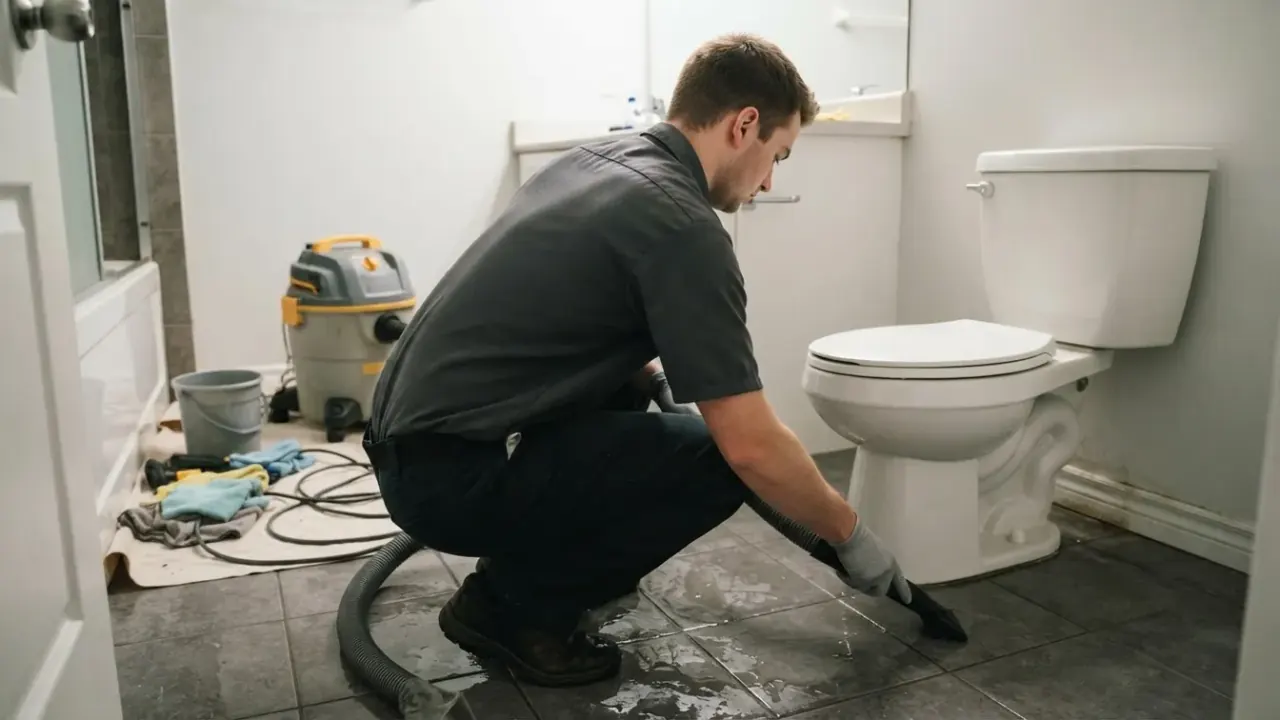
To safely clean up a toilet overflow, stop the water at the supply valve first, then treat every drop as contaminated sewage - gloves, eye protection, and a disinfectant rated for Category 3 water. The water in your toilet bowl is not clean; it carries bacteria, viruses, and sometimes parasites that survive on tile and grout for days.
We handle these calls across Bothell every week, and the difference between a two-hour cleanup and a $4,000 floor replacement almost always comes down to what the homeowner does in the first ten minutes. Below is the exact process our technicians follow, plus the mistakes that turn a small overflow into a mold problem.
Why a toilet overflow is a sewage problem, not a water problem
A toilet overflow is a Category 3 water loss, which means the water is grossly contaminated and requires disinfection, not just drying. The IICRC - the body that sets the water-damage standard our industry follows - classifies toilet bowl water and any backup from the drain line as Category 3 because it contains human waste.
That classification matters because it changes everything about the cleanup. You cannot dry Category 3 water and call it done. Porous materials that soak it up - carpet, drywall, baseboards, particle board vanities - have to come out, because no amount of air movement will make them safe again.
Most overflows we see in Bothell start the same way: a clogged trapway, a flapper that never seats, or a fill valve that keeps running after the bowl is full. The toilet itself is fine. The water on your floor is the problem.
What should I do first after a toilet overflow in Bothell WA?
The first thing to do after a toilet overflow in Bothell WA is shut off the water supply, and you do that by turning the oval valve behind the toilet clockwise until it stops. If the valve is seized or you cannot find it, lift the tank lid and push the flapper down flat, or shut off the main at the meter.
Then do these four things in order:
- Kill the power to any outlet, baseboard heater, or light fixture the water has reached. If water is near an outlet, trip the breaker before you step in.
- Get people and pets out of the room. A toddler crawling through this water is a real exposure risk.
- Photograph everything before you touch it - the standing water, the base of the toilet, any damaged flooring. Your insurance adjuster will want these.
- Stop the spread with towels rolled into a dam at the doorway so water does not wick into the hallway carpet.
If the water is more than a quarter inch deep or has reached carpet, that is the point where most homeowners call us instead of reaching for a mop. We run emergency sewage removal bothell WA calls 24/7 for exactly this situation.
How to safely clean up a toilet overflow: the step-by-step process
How to safely clean up a toilet overflow comes down to six steps: protect yourself, remove solids, extract the water, disinfect, dry the structure, and verify. Skip any one of them and you are rolling the dice on odor and mold.
Step 1: Gear up before you touch anything
Nitrile gloves, eye protection, and rubber boots are the minimum. If you have an N95 or P100 respirator, wear it - aerosolized bacteria from a toilet overflow is a real thing, especially if you are running a wet vac.
Open a window or run the bathroom fan. You want cross-ventilation for the entire cleanup.
Step 2: Remove solid waste and standing debris
Use paper towels or a dedicated shop rag to pick up any solid material and bag it immediately in a sealed trash bag. Do not put it in the kitchen trash. Double-bag it and take it straight to the outside bin.
Step 3: Extract the standing water
A wet/dry shop vac works for small spills, but you have to disinfect the vac afterward or you will just spread the contamination next time you use it. For anything larger than a few square feet, professional sewage water extraction bothell WA pulls the water out and hauls it away instead of dumping it down your drain.
If you do it yourself, empty the vac into a utility sink or toilet, not the kitchen drain, and flush the area with clean water afterward.
Step 4: Disinfect every hard surface
Mix one-third cup of household bleach per gallon of water, or use a quaternary ammonium disinfectant labeled for sewage. Let it sit on the surface for the full contact time on the bottle - usually 10 minutes - then wipe. Bleach needs that dwell time to actually kill anything.
Hit the floor, the base of the toilet, the vanity legs, the baseboards, and the lower six inches of any wall the water touched. Grout lines hold contamination longer than tile does.
Step 5: Dry the structure, not just the surface
Air movers and a dehumidifier run for 24 to 72 hours depending on how much water soaked into the subfloor. A box fan in the doorway is not enough. You are trying to pull moisture out of the framing and subfloor, and that takes moving air plus a dehumidifier pulling the moisture out of the air.
If the overflow reached carpet or the carpet pad, that material is gone. We remove it - see our sewage soaked carpet removal bothell WA service - because pad is a sponge and it will never dry clean.
Step 6: Verify with a moisture meter
A $40 pin-type moisture meter from any hardware store tells you whether the subfloor is actually dry. Normal indoor wood reads 8 to 12 percent. If you are still reading 20 percent three days later, you have a problem that air movement alone will not fix.
Is toilet overflow water dangerous in Bothell Washington?
Yes - toilet overflow water is dangerous in Bothell Washington and everywhere else, because it is Category 3 sewage-contaminated water that can carry E. coli, salmonella, norovirus, and hepatitis A. You do not need to drink it to get sick. Touching your face after handling a contaminated towel is enough.
The risk profile changes with who is in the house. A healthy adult with intact skin has a low but real risk. Anyone who is immunocompromised, pregnant, elderly, or under five years old should not be in the room during cleanup at all.
There is also a secondary risk that people forget: mold. Bothell averages around 37 inches of rain a year, and our indoor humidity sits high from October through April. Wet drywall in a closed bathroom can grow visible mold in 48 to 72 hours here. That is faster than in drier parts of the state, and it is why we push drying hard on every job.
If the overflow soaked into drywall, the affected section usually has to come out. We handle that as drywall removal and replacement for sewage damage bothell WA - cut out the wet section, treat the framing, and replace it after the cavity is dry.
Common mistakes we see during toilet overflow cleanup
The most common mistake during toilet overflow cleanup is treating it like a spilled glass of water - mop, towel, done. Here is what we actually find when we get called in after a DIY attempt.
- Using the household mop and bucket. That mop is now contaminated. Unless you soak it in disinfectant for the full contact time, you are spreading bacteria to the next room you clean.
- Running a consumer fan and calling it dry. A box fan moves air. It does not remove moisture from the air, so the subfloor stays wet underneath a dry-looking surface.
- Bleaching and rinsing immediately. Bleach needs 10 minutes of wet contact to work. Wiping it off after 30 seconds does almost nothing.
- Pulling up carpet but leaving the pad. The pad is the worst offender. If the pad stays, the smell comes back within a week.
- Ignoring the wall cavity. Water wicks up drywall by capillary action - often 6 to 12 inches above the visible water line. If you only treat what you can see, mold grows behind the baseboard.
- Skipping the odor treatment. Disinfection kills the bacteria, but the smell lingers in grout, caulk, and the subfloor. That is a separate step, and it is what sewage odor removal bothell WA is for.
We see a lot of these mistakes in the older housing stock around sewage backup cleanup in Bothell Landing, where 1970s and 1980s builds have original subfloor and thin vinyl that traps moisture against the plywood.
When to call a professional for toilet overflow in Bothell
Call a professional when the water covered more than a few square feet, reached carpet or drywall, came up from the drain rather than the bowl, or happened while you were away. Those four situations almost always mean hidden moisture and a Category 3 cleanup that needs extraction equipment and a moisture meter to verify.
Also call us if the overflow was caused by a main line backup. That is a different problem - the sewage is coming from the city side or a blocked lateral, and cleaning the bathroom floor will not fix it. You need the line cleared first, then the cleanup.
Sewrage backup Pros handles the full job: extraction, disinfection, drying, odor treatment, and any flooring or drywall that has to be replaced. We give you an upfront price before we start, and we work directly with your insurance adjuster on covered claims.
Frequently Asked Questions
How do I safely clean up a toilet overflow in Bothell?
Shut off the water supply, kill power to the room, then extract the standing water with a wet vac or towels. Disinfect every hard surface with a bleach solution or quat disinfectant and let it sit 10 minutes. Dry the subfloor with air movers and a dehumidifier for 24 to 72 hours, then verify with a moisture meter.
What should I do first after a toilet overflow in Bothell WA?
Turn the supply valve behind the toilet clockwise until it stops. If it will not turn, lift the tank lid and hold the flapper down. Then cut power to the room if water is near any outlet, get kids and pets out, and photograph the damage before you clean anything for your insurance claim.
Is toilet overflow water dangerous in Bothell Washington?
Yes. It is Category 3 sewage-contaminated water carrying E. coli, salmonella, and norovirus. Skin contact is a real exposure risk, and aerosolized bacteria from wet-vac use can be inhaled. Anyone immunocompromised, pregnant, elderly, or under five should stay out of the room entirely during cleanup.
When should I call a professional for toilet overflow in Bothell?
Call when water covered more than a few square feet, reached carpet or drywall, backed up from the drain instead of the bowl, or sat for hours while you were out. Those cases need extraction equipment, commercial drying, and moisture verification that a shop vac and a box fan cannot deliver.
Does homeowners insurance cover toilet overflow cleanup in Bothell?
Most Bothell policies cover sudden and accidental toilet overflow damage, including extraction, drying, and replacing damaged flooring. They typically exclude damage from a slow leak you knew about. Photograph everything before cleanup and call your adjuster the same day - we document the loss for you.
Get help with sewage backup cleanup in Bothell
If the water is still on the floor or you can smell it from the hallway, stop reading and call us. We handle sewage backup cleanup bothell WA seven days a week, with extraction, disinfection, and drying done in one visit.
Call 425-903-5051 and we will tell you on the phone whether it is a DIY job or a same-day dispatch.